What I build on the side.
I lead engineering by day and build at night, because the fastest way to understand what agents change is to work with them. Most of it is open source and lives on GitHub.
Memory and privacy for AI
The thread through most of my work: agents need memory they can rely on, and people need to stay in control of what those agents know.
LOCI-DB
Open source · Apache 2.0Spatial memory for physical AI.
A memory layer that gives any embedding an address in space and time, so robots, drones, wearables and world models can remember what they saw, where and when, and notice what is new.
- One query combines similarity, place and time, built on a 4D Hilbert-curve index
- A calibrated novelty score: “have I seen this here before?”
- Memory that ages: recent detail stays sharp, old episodes consolidate into summaries
- Runs in-process with no infrastructure, or on Qdrant in production; ships an MCP server
LOCI Companion
PrototypeA personal AI assistant with vision memory.
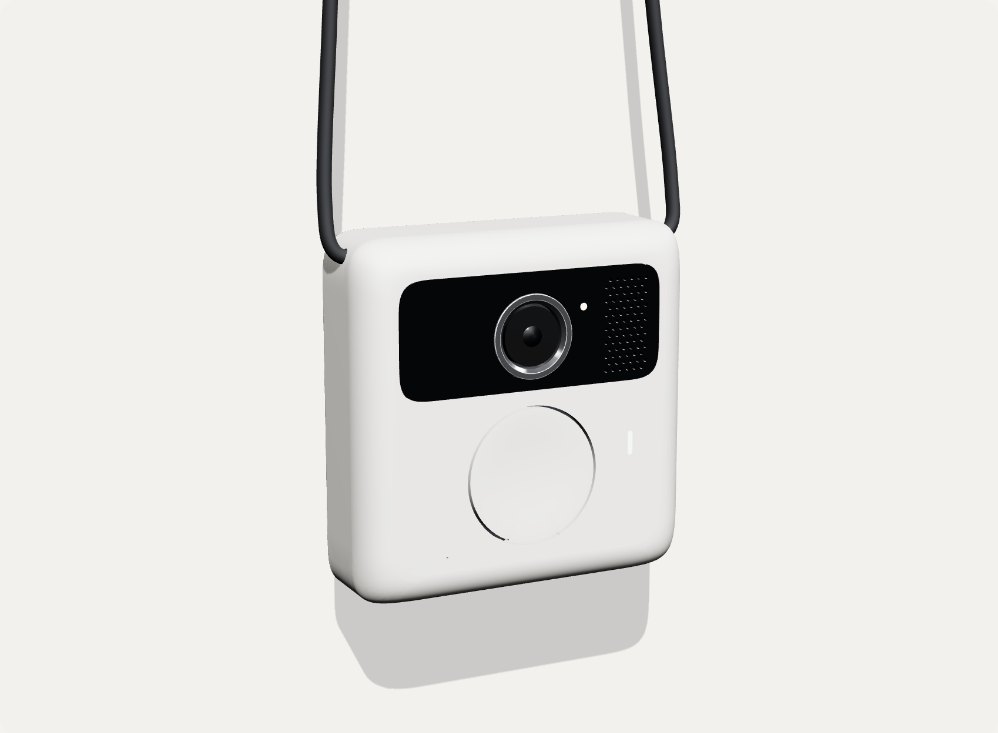
A camera pendant built on an ESP32-P4 that streams what it sees to a host running LOCI-DB, so you can ask out loud where you left something and hear the answer from the device. It keeps remembering to its microSD card when the network drops and answers simple questions on-device.
Enclave
Early beta · Provisional patentYour files stay on your machine. Your AI still gets answers.
A local agent that external AI assistants query over MCP. When Claude or another assistant asks about your documents, Enclave retrieves the relevant passages and writes the answer locally with an on-device model, so the assistant receives the answer, not your files.
- Desktop app with local chat on Apple Silicon (MLX)
- One command connects Claude Desktop
- Secrets and document text encrypted at rest
OpenContext Vault
Open sourceA user-owned, encrypted, portable memory for AI agents.
Import your history from ChatGPT, Claude or your notes into an encrypted local vault, then grant individual tools scoped access to it over MCP. One memory, owned by you, shared with the tools you choose.
WDVA: private AI adapters
ResearchPersonalised models without giving up your data.
Weight-Delta Vault Adapters train a small adapter on your documents, encrypt it, and load it only in memory when needed. Destroying the key deletes the model: a cryptographic right to be forgotten.
Agentic engineering
Tools for building software with agents, where humans keep ownership of intent and sign-off.
Spec-Driven Engineering Loop
Open sourceFrom spec to reviewed pull request, without auto-merge.
A Claude Code boilerplate that turns a SPEC, PRD and ADR into a tested implementation through a closed loop of plan, implement, review, fix and verify. Deterministic gates the model cannot skip, cost and iteration caps, and a human who owns the merge.
Powerhouse
Early stageDeclare the business, reconcile the infrastructure.
An autonomous engineering harness that turns a plain-language business idea into a structured intent file, project tracking, infrastructure checks and diagnosed fixes, with honest states for what is synced, drifted or not yet configured.
Hermes G2 HUD
Open sourceWatch your agents from your glasses.
Monitor and control AI agents from Even Realities G2 smart glasses: live status, scheduled-job results, notifications and voice commands on a glanceable display.
WordPress at scale
Experiments from the platform I work on every day.
Lifeboat
Open sourceA static lifeboat for WordPress when the origin goes down.
Keeps a versioned static snapshot of a WordPress site in Cloudflare R2 and serves it from a Worker when the origin times out or errors, then hands traffic back when it recovers. Snapshots are promoted only after they pass sanity checks.
AutoscaleWP
Proof of conceptAgentic managed WordPress for teams that deploy like engineers.
Explores a CI/CD-native WordPress platform where an agent learns from every deploy to predict traffic spikes and scale before they happen.
Research
Questions I wanted answered with data.
TSFM-Autoresearch
ResearchCan an autoresearch loop beat a fixed forecasting model?
Tests whether a per-request research loop over a frozen TimesFM time-series model forecasts multi-tenant resource use better than any single fixed configuration, within a 200 ms latency budget.
JEVTrader
ResearchAre LLM backtests measuring skill or memory?
Scores SEC 8-K filings point-in-time to separate genuine predictive signal from a model simply remembering what happened. Research software: it places no orders and claims no edge.
Everything else, including experiments and forks, is on github.com/zd87pl.
Get the next essay in your inbox.
One email when I publish something new. No spam, unsubscribe anytime.